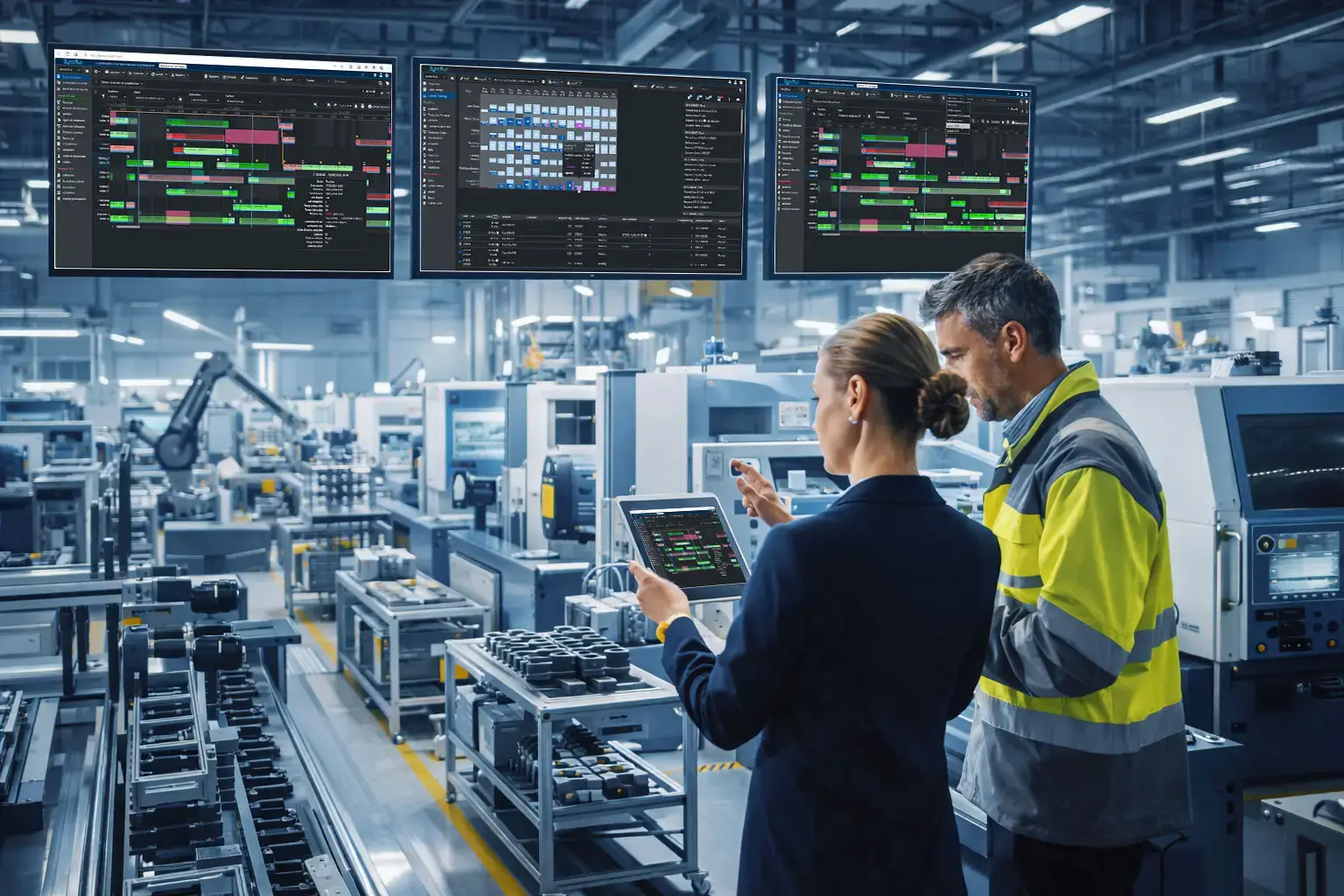
In today's fast-paced industrial landscape, the margin for error in production is shrinking. Customer expectations are rising, supply chains are growing more complex, and operational costs are under constant pressure. For manufacturers looking to stay competitive, Advanced Planning and Scheduling (APS) has become one of the most strategic investments they can make.
But what exactly is APS, and why is it increasingly becoming the backbone of manufacturers and industrial operators today?
Defining Advanced Planning and Scheduling
Advanced Planning and Scheduling (APS) refers to a set of analytical, data-driven processes and technologies that enable manufacturers to optimize the planning of production resources, including machines, labor, materials, machine setup times, and more.
Unlike traditional planning tools that work in sequential, siloed steps, APS software solutions work simultaneously across multiple variables and constraints. They consider real-time data, capacity limitations, material availability, human resources and their skill sets, due dates, orders, machine availability, and other production constraints to generate plans and optimized production schedules in minutes.
At its core, APS bridges the gap between high-level business planning (demand forecasting, supply chain strategy) and daily manufacturing planning and scheduling. It transforms production schedules that teams can act on with confidence.
The Key Benefits of Advanced Planning and Scheduling
Implementing an Advanced Planning and Scheduling software delivers tangible, measurable value across the entire organization::
1. Optimized Resource Utilization
APS ensures that every machine, workstation, and team member is assigned tasks in the most efficient sequence possible. By eliminating idle time and reducing bottlenecks, manufacturers can extract significantly more output from existing assets, without adding capital costs.
2. Reduced Lead Times
By modeling the most optimal production path in real time, APS reduces delivery lead times lead times and allows manufacturers to respond faster to customer orders. This translates directly into improved customer satisfaction and a stronger competitive position.
3. Improved On-Time Delivery
When plans are built around real capacity and real constraints, the gap between planned and actual delivery shrinks dramatically. APS enables production teams to commit to delivery dates with much greater accuracy.
4. Better Inventory Management
Rather than relying on safety stock buffers to absorb planning uncertainty, APS aligns production more precisely with actual demand signals, reducing excess inventory and freeing up working capital.
5. Faster Response to Disruptions
When a machine goes down, an order is expedited, or material delivery is delayed, APS can recalculate and re-optimize the entire production in real time. This agility is a critical advantage in volatile manufacturing environments.
6. Increased Production Throughput
Production throughput is measured by the quantity of finished goods generated per unit of time. APS optimizes resource utilization and maximizes production throughput, allowing manufacturers to produce more with existing assets — without adding machines or equipment.
7. Real-Time Visibility into Available Capacity
APS gives planners a clear, up-to-date view of available capacity, machines, workstations, and team members, at every point in the production schedule. Delivery dates are based on the reality of the shop floor, not an optimistic estimate. Last-minute rushes decrease, replanning decreases and gains in precision, building customer confidence.
8. Production Scenario Modeling
APS gives planners and operations managers powerful scenario modeling capabilities. Teams can simulate hypothetical scenarios before committing to a plan, reducing risk and enabling more informed decisions.
OSI Group, a leading manufacturer in the fabrication and metals industry, multiplied its simultaneous production jobs from 400 to over 1,000 and doubled its production volume in just four years, without increasing headcount. On-time delivery improved by 40%, and customers could rely on confirmed delivery dates months in advance.
Key Features of an APS Software
Advanced planning and scheduling software does much more than simply generate a schedule. It integrates powerful features such as real-time constraint management, scenario simulation, visibility into production capacity, and the automatic optimization of manufacturing sequences. These capabilities empower planning team members to make faster, more accurate decisions that are better aligned with the realities of the shop floor.
To dive deeper, discover the essential features of an APS software in detail in our dedicated article: The 4 core features of an Advanced Planning and Scheduling (APS) software
The Manufacturing Challenges APS Solves
Manufacturing production planning software with APS capabilities is specifically designed to address the most persistent and costly challenges in industrial operations:
High-Mix, Low-Volume Production Complexity
Managing hundreds of product variants, custom orders, and short production runs simultaneously is a planning nightmare without the right tools. APS handles this complexity with ease, generating optimal sequences that account for setup times, tooling changes, and workflow dependencies.
Capacity Bottlenecks
In most manufacturing environments, a small number of critical resources constrain overall throughput. APS identifies these bottlenecks proactively and schedules work to maximize flow through them, preventing cascading delays.
Disconnected Planning Silos
When sales, procurement, production planning, and shop floor operations each work from different systems or spreadsheets, misalignment is inevitable. APS integrates these functions around a single, synchronized plan, eliminating the "lost in translation" effect.
Reactive vs. Proactive Planning
Many manufacturers still operate in a reactive mode, firefighting daily disruptions rather than anticipating them. APS shifts the planning posture from reactive to proactive by building resilience and flexibility directly into the schedule.
ERP Limitations
While ERP systems are essential for transactional management, they were not built for dynamic, constraint-based scheduling. APS fills this gap by layering intelligence and optimization on top of the data that already lives in your ERP.
Meeting Customer Commitments at Scale
As order volumes grow, manually balancing customer priorities, production constraints, and material availability becomes unsustainable. APS automates and optimizes this balancing act, enabling manufacturers to scale without sacrificing service levels.
Who Is APS For?
Advanced Planning and Scheduling is not a one-size-fits-all solution, but it delivers profound value to specific roles within a manufacturing organization:
The Production Planner / Scheduler
This is the primary user of APS. Planners spend less time building and rebuilding spreadsheets and more time managing exceptions and driving continuous improvement. APS becomes their most powerful tool for translating customer demand into executable, optimized schedules.
The Operations / Plant Manager
Plant managers gain full visibility into current and future capacity utilization, resource loading, and production performance. APS empowers them to make proactive decisions, shifting resources, adjusting priorities, or escalating issues, before problems become costly.
The Supply Chain Manager
APS provides the supply chain team with accurate, up-to-date visibility into material requirements and production timelines. This alignment between supply and production planning reduces shortages, excess procurement, and emergency purchases.
The Sales & Customer Service Team
With APS, sales teams can provide customers with realistic, data-backed delivery commitments, rather than educated guesses. This builds trust, reduces back-and-forth communication, and supports revenue growth.
The CFO / VP of Operations
For senior leaders, APS delivers strategic visibility into operational performance and cost drivers. By improving asset utilization, reducing waste, and shortening lead times, APS has a direct and measurable impact on profitability and working capital.
Conclusion: From Complexity to Clarity With APS Software
Manufacturing has never been simple, and it is only getting more complex. Advanced Planning and Scheduling is not just a technology upgrade. It is a strategic enabler that transforms how manufacturers plan, execute, and improve.
Whether you are a mid-sized contract manufacturer managing custom orders or a large-scale industrial producer balancing global demand, manufacturing production planning software gives your teams the clarity, agility, and confidence they need to thrive.
The manufacturers who invest in smarter planning today are the ones who will lead their industries tomorrow.
Ready to Transform Your Production Planning?
Join manufacturers like Groupe OSI who replaced manual spreadsheets with intelligent advanced planning and scheduling, and never looked back.